
Hamilton Duplex Investment Example Explained

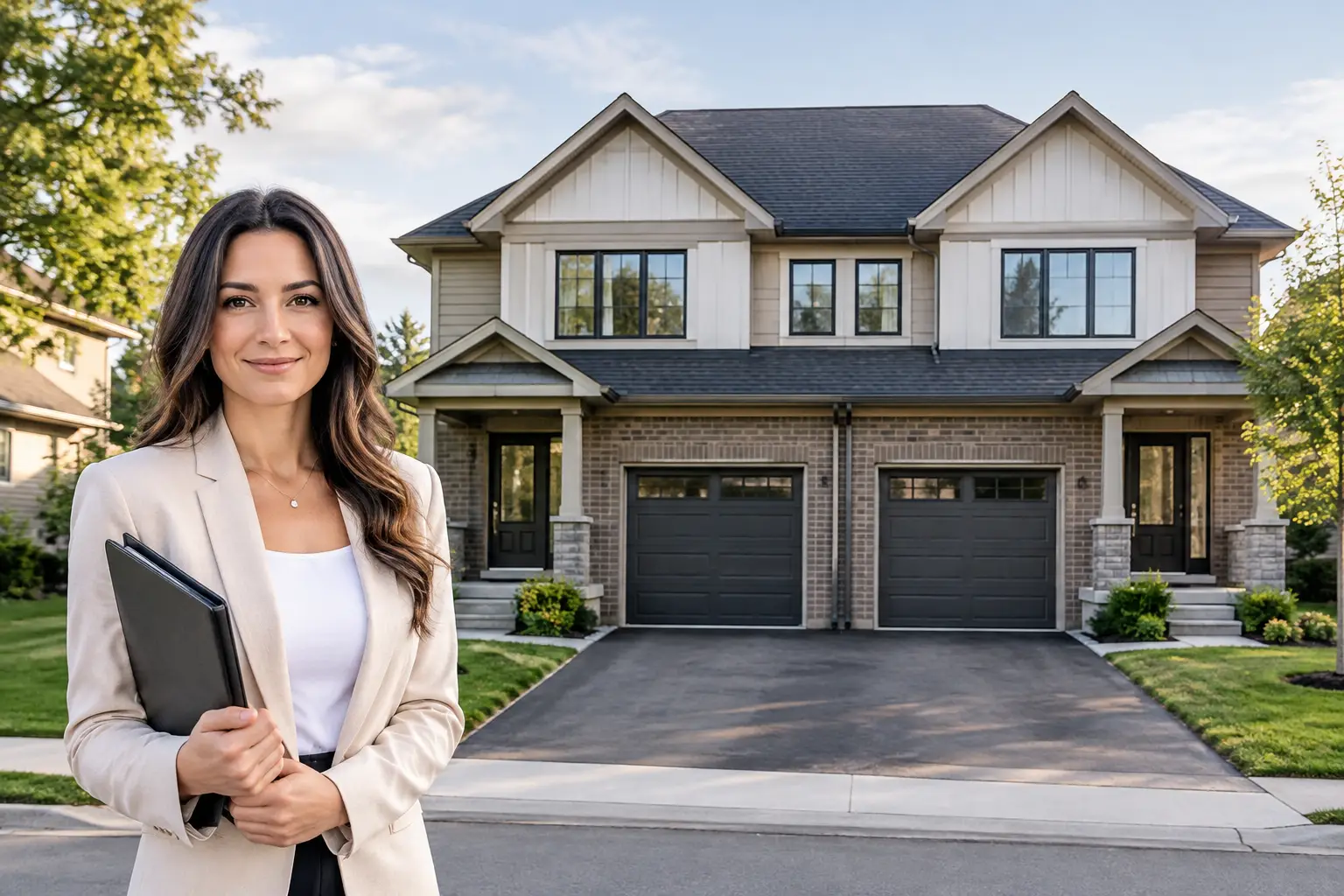
A Hamilton duplex investment example can look compelling on a listing sheet: two rental suites, two income streams, and the possibility of living in one unit while renting the other. The real decision, however, happens after you test the rents, operating costs, financing terms, property condition, and your own capacity to manage a rental home. A duplex can be a practical addition to an Ontario real estate plan, but only when the numbers still make sense after realistic assumptions.
For homeowners in Halton Hills who are considering a move, a duplex purchase in Hamilton may also be part of a broader strategy. Some buyers sell a larger Georgetown, Glen Williams, or Acton home, then use their equity to purchase a property that combines housing and rental income. Others are weighing whether an investment property belongs in their long-term plan at all. The answer depends on cash flow, risk tolerance, timing, and the role the property will play in your life.
Hamilton Duplex Investment Example: Start With the Property
The following is a hypothetical example, not a current listing, appraisal, financing quote, or forecast of investment performance.
Assume a buyer is considering a legal or legally established duplex in Hamilton at a purchase price of $800,000. The main-floor and basement suites are separately laid out, with distinct kitchens, bathrooms, and entrances. The buyer expects to rent both units rather than occupy one.
Before calculating income, the first question is whether the property is truly configured and approved as represented. A second suite, basement apartment, or converted duplex can involve different zoning, building, fire-safety, and registration considerations. Buyers should review available permits and documents, include suitable due-diligence conditions where appropriate, and confirm current requirements with the City of Hamilton and qualified professionals.
A lower purchase price does not automatically create a better investment. A property needing electrical upgrades, foundation work, drainage improvements, new windows, or major fire-separation work can absorb capital quickly. A well-maintained duplex with slightly lower apparent income may be the more predictable choice.
Estimate Income With Conservative Rents
For this example, assume the projected monthly rents are $2,250 for the upper unit and $1,750 for the lower unit. That produces scheduled gross rent of $4,000 per month, or $48,000 annually.
Those numbers should never come solely from a seller’s estimate or an online rent calculator. An investor should compare genuinely similar rental homes: same unit type, bedroom count, condition, parking, utilities, laundry access, and location. Rent is also affected by whether the unit is furnished, whether utilities are included, and whether a tenant has exclusive outdoor space.
Hamilton is not one uniform rental market. A property close to transit, employment areas, hospitals, schools, or established commercial districts may attract different tenants and command different rents than a similar property elsewhere. That does not mean a buyer should assume every convenient location will outperform. The actual suite quality and local competing inventory still matter.
It is prudent to include a vacancy and collection allowance even when rental demand appears strong. In this illustration, an allowance of 3% of gross annual rent equals $1,440. This is not a prediction that a unit will sit vacant. It is a reminder that leases end, turnovers take time, and unexpected non-payment or repairs can interrupt income.
The Expenses That Change the Picture
Gross rent is not cash flow. The owner must account for costs that continue whether the property is fully occupied or not.
In this hypothetical case, annual operating expenses could include $7,200 for property taxes, $1,800 for insurance, $3,000 for utilities paid by the owner, $1,500 for routine maintenance, $1,200 for snow removal and landscaping, and $1,200 set aside for longer-term repairs and replacements. Total annual operating expenses would be $15,900.
After the $1,440 vacancy allowance, effective income is $46,560. Subtracting $15,900 in operating expenses leaves net operating income of $30,660 before mortgage payments and income taxes.
This is where an investor should slow down. An annual maintenance allowance is not the same as a guarantee that expenses will stay within that amount. A furnace, roof, plumbing issue, appliance failure, or water event can exceed a planned reserve. Older housing stock can offer character and strong locations, but it also requires more careful inspection and budgeting.
Financing Is Not a Footnote
Suppose the buyer makes a 25% down payment of $200,000 and finances $600,000. The actual mortgage payment will depend on the interest rate, amortization period, lender qualification, and mortgage product available at the time of purchase. Rather than inserting a single rate and treating it as certain, request a lender-specific payment estimate and test more than one scenario.
If the annual mortgage payments are greater than the $30,660 net operating income, the property may require additional monthly funds from the owner. That does not automatically make it a poor purchase. Some buyers accept negative cash flow because they intend to occupy one unit, prioritize location, or have a long investment horizon. But the shortfall must be affordable without relying on rent increases, refinancing, or a future sale.
A sound review asks: Can I carry this property if one unit needs work? What happens if insurance or taxes rise? Do I have cash reserves after closing? Would this property still fit if my own housing plans change?
Landlord Responsibilities Are Part of the Investment
A duplex is not simply a spreadsheet. It is a home for tenants, and Ontario rental housing has rules that affect how a landlord can set up, operate, and end tenancies. Buyers should understand whether existing tenancies will continue after closing, what utilities the owner is responsible for, and which repairs are required.
Ontario landlords generally have ongoing maintenance obligations, and tenancy matters can be governed by the Residential Tenancies Act. This article is general information, not legal, tax, or financial advice. For a particular property or tenancy, speak with a qualified lawyer, accountant, mortgage professional, and, when needed, a paralegal or property management professional.
Self-management may save a management fee, but it asks for time, systems, and calm communication. A professional manager may reduce day-to-day involvement, though management fees and service scope need to be assessed carefully. The right approach depends on the owner’s experience, proximity to the property, and availability.
How a Halton Hills Seller Might Use This Strategy
For a seller in Georgetown, Acton, or Glen Williams, a Hamilton duplex may be considered after a sale, not before it. The order matters. Selling first can provide certainty about available equity, but it may require interim housing or a longer search. Buying first can secure the desired property, but it introduces financing and timing risk if the current home has not sold.
This is especially relevant for downsizers. Moving from a larger Halton Hills home into a duplex where one suite is owner-occupied can create flexibility, but it also means sharing a property with tenants and taking on landlord obligations. Some homeowners prefer a simpler condominium or a smaller detached home instead. There is no universally right structure.
A coordinated plan should review likely sale proceeds, closing costs, desired purchase range, reserve funds, and the consequences of different closing dates. Strong negotiation is not only about price. Conditions, possession timing, tenant documentation, included equipment, and repair expectations can affect the real value of a duplex purchase.
Questions to Ask Before Writing an Offer
Before moving ahead, ask for the current rent roll, lease details, utility responsibilities, recent tax and insurance costs, maintenance history, and documents supporting the unit configuration. Review whether tenants are month-to-month or under fixed-term leases, and do not make assumptions about vacant possession.
Also ask what the property needs in the first year. If the answer includes a roof, electrical panel, drainage work, or suite upgrades, obtain qualified opinions and price those items before deciding what the property is worth to you. The best offer is not always the highest offer. It is the offer that reflects the property’s income, condition, risks, and your financing position.
Ana Bastas Real Estate brings a practical, negotiation-focused approach to buyers, sellers, investors, and landlords across Halton, Hamilton, Niagara, and the GTA. Experience the AB Advantage™ with advice shaped around your actual move, not a one-size-fits-all investment pitch.
Planning a move in Halton Hills or our broader service areas? Contact Ana Bastas Real Estate for a strategy tailored to your goals. 289-670-5888 | ana@anabastas.ca
Ana Bastas, ABR®, SRS®, SRES®, RENE® | Founder & Listing Specialist | Ana Bastas Real Estate | Serving clients since 2012
Categories
- All Blogs (1392)
- Ana Bastas Real Estate Team (1)
- Ana Bastas Realtor (1)
- Ana bastas Realty (1)
- Brampton (2)
- Burlington (10)
- Buy & Travel™ Program (12)
- Buyer (347)
- Community News (2)
- Divorce (21)
- Downsizing (20)
- Events (73)
- First Time Home Buyers (156)
- Georgetown (38)
- Georgetown Buyers (8)
- Halton Hills (273)
- Hamilton (29)
- Holidays (18)
- How To (139)
- Interest Rates (11)
- Investor (49)
- Join ABR Team (4)
- Landlord (105)
- Lifestyle (178)
- Milton (83)
- Mississauga (3)
- Mortgage (23)
- Niagara (39)
- Oakville (6)
- Real Estate News (236)
- Realtor (68)
- Renter (100)
- Seller (266)
- Tax's (28)
- Tips (41)
- Toronto (149)
- Wealth Building (14)
- Wellington (4)
- YYZ (107)
Recent Posts








"My job is to find and attract mastery-based agents to the office, protect the culture, and make sure everyone is happy! "